Saturday, 9 April 2011

Aviation Challenge: Yvette vs Violette

I'm not sure at what point Crème de Violette either became virtually unavailable or simply fell out of fashion—it's interesting to note that, while the first published recipe for the Aviation cocktail, which included it as an ingredient, was in 1916 in Hugo Ensslin's Recipes for Mixed Drinks, by the time of 1937's The Café Royal Cocktail Book and even 1930's The Savoy Cocktail Book and Cocktails by "Jimmy", Late of Ciro's, crème de violette had vanished from the recipe. A 1965 episode of The Avengers actually revolves around the scarcity of the drink. However, today it is one of those "lost" ingredients that is once again manufactured by a number of firms.

Another lost and found ingredient is Crème Yvette, a liqueur that also has violets in it, among other things, and DBS has been encouraging me to try a head-to-head between the two in the Aviation cocktail. I've never actually seen an Aviation recipe that specified Crème Yvette in this way (although the Blue Moon cocktail from about 1940 is the same minus the maraschino), but I notice that the label of the recent rerelease mentions this cocktail by name. In any case, it sounded like an interesting experiment.

Aviation
1¾ shots gin
½ shot maraschino
½ shot lemon juice
¼ shot crème de violette
Shake with ice and serve with a lemon twist


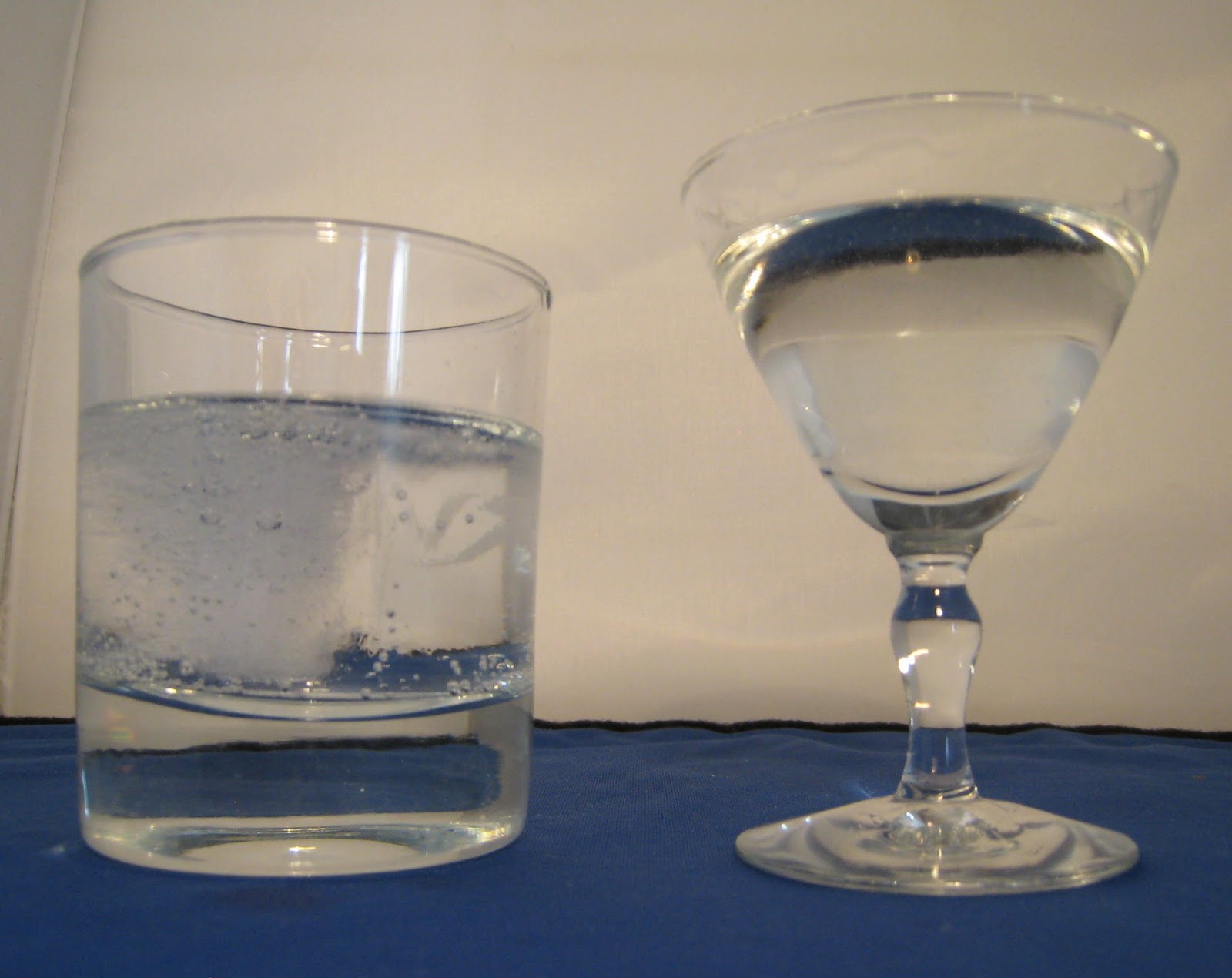
As you can see from the picture, the first obvious different is colour—although in practice both drinks were a bit lighter than they appear in the photo, but it gives you a general idea.

Made like this the classic recipe has just the right sweet/sour balance, with the added floral interest deftly hovering over the top: all the flavour elements are fairly clearly defined. Made with Yvette, the drink has a strikingly similar profile, but is clearly sweeter, both because the liqueur is sweeter but also the berry fruit elements in it come out, giving a sense of intrinsic sweetness, I think, as if there is a dash of Ribena in there.

The crème de violette I used was the Bitter Truth version, and I sense it was intended for cocktails rather than for sipping: tasted neat it is quite dry and single-mindedly a violet essence, presumably with some colour in there too. The Crème Yvette I used was given to me by DBS in a plain sample bottle (he does that a lot), but I assume it is the recent rerelease from Rob Cooper, the man behind St Germain elderflower liqueur. The drink was originally manufactured in the US by the Sheffield Company of Connecticut, but the rights were later bought by Charles Jacquin et Cie—see David's post on Rock and Rye—which was in turn acquired by Maurice Cooper, Rob's grandad. Production ceased in 1969.

Tasted neat, Crème Yvette has a more balanced and complex taste than the crème de violette, with the violets and red berries coming out clearly—it is made with blackberries, raspberries, strawberries and blackcurrants, plus vanilla, honey and orange peel too, I gather.

Personally I think I prefer the cocktail made with the violette: the flavour elements blend harmoniously but each stands clearly defined too, giving the drink a classic simplicity. But if you prefer your drinks a little sweeter than perhaps they tended to be in the Golden Age, give the Yvette a try. It's also possible that the Blue Moon, without the maraschino, restores the sweetness balance. If I've got enough Yvette left in my sample I'll give it a try and report back.

For more Crème Yvette cocktail recipes see www.cremeyvette.com.

Tuesday, 5 April 2011

Floral Delights—Chase Elderflower Liqueur

Members of the New Sheridan Club may recall the Elderflower-themed Cocktail Cabinet in March's newsletter; well today we have a special bonus feature on Chase Elderflower Liqueur (20%ABV). This comes from the same company that make a vodka that was voted "World's Best 2010", as well as Chase Gin and an excellent Smoked Vodka.


#3 Gin & Elderflower
#4 Elderflower Bramble
#1 On its own
Nose: Sweet, slightly jammy nose of elderflower with a tiny hint of citrus.
Taste: Soft and syrupy in the mouth, sweet elderflower with a slight, tea-like muskiness. Very pleasant to sip. In terms of sweetness it sits between the sugary St. Germain and the slightly sharper Bitter Truth.

#2 Elderflower Collins
Made in the same way as a normal Gin Collins: equal parts Chase Gin, Lemon Juice and Sugar Syrup with an additional equal part of Elderflower Liqueur. Top up with soda water. Cool and refreshing, not too sweet; a nice long way to enjoy Chase Elderflower.


#3 Gin & Elderflower
A 4:1 mix of Chase Gin:Chase Elderflower, Shaken.
This is a cloudy Martini-esque drink with the sweetness of the liqueur just rounding off the edges of the gin. The elderflower brings out the fruit and floral elements of the gin.


#4 Elderflower Bramble
Rather cooling, rather lovely. The difference between this and a normal Bramble is that it is less jammy and as you're using elderflower rather than blackberry it is much fresher. I think that the flavours of lemon and elderflower are natural partners and it's interesting to note that, as you drink the drink, the taste of elderflower grows stronger as the liqueur sinks to the bottom.

#5 Fashionable Elderflower


#5 Fashionable Elderflower
Made in the same way as a Gin Old Fashioned but the sugar cube and water are replaced with 10ml of the Elderflower Liqueur. This is a pleasant way to enjoy both the Chase Gin and the Chase Elderflower. The Angostura Bitters and Elderflower flavours compliment each other well and this drink has the right balance of sweetness as well as a subtle fruity edge.

Chase Elderflower Gin is available from the Chase Website.
£10.50 for 20cl or £19.50 for 50cl.

Saturday, 2 April 2011

Desert Island Drinks


As part of the re-branding of BBC Radio 7 to "Radio 4 Extra" all of the choices from the castaways of Desert Island Disks have been released; but how many chose some form of imbibement as their luxury item?


GIN
Forget Gordons, Freddie will make his own.

Mark Lubbock, Musician, Conductor Composer: Gin
Frank Swinnerton, Novelist Gin & Vermouth
Raymond Leppard, Musician Composer: Gin, Dry Martini and lemons

Not Content with just drinking Gin:

Sir Torquil Norman Aviator, Inventor and Arts Patron
A miniature still with a little ice-making machine attached to it to make Dry Martinis.
Freddie Jones Actor
Liebig condenser for distilling Gin


RUM
Desmond Tutu, partial to a scoop of Rum & Raisin
Tyrone Guthrie, Director
Carlos Acosta, Dancer: Case of Havana rum
Jonathan Pryce, Actor: Endless supply of rum punch
Andrew Davies, Endless supply of Mojitos
Archbishop Desmond Tutu: Ice-cream maker (especially for rum and raisin flavour)


WHISK(E)Y
Kingsley Amis (who went on disks twice) liked both Scotch & American whisk(e)y
Kingsley Amis (1961) American
Kingsley Amis (1986) Scottish
Burt Ives; Actor/Writer/Singer: (Tobermory)
David Cameron, Prime minister: A Crate of Scottish Whisky
Marquess Of Bath Owner of Longleat
C Day Lewis, Poet Laureate, Bourbon Whiskey


VODKA
Terry Wogan - Vodka
Howard Goodall - Ice-cold vanilla vodka and tonics


BRANDY
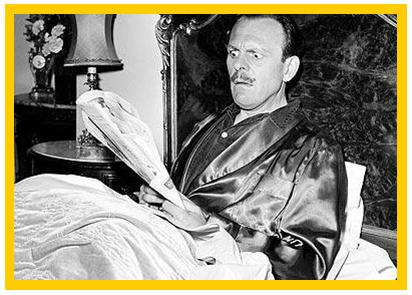
Terry looks unnerved by rumours of phylloxera in France

Ian Hendry, Actor
Edith Coates, Musician
Terry Thomas, Actor
Ken Russell, Film Director
Jean Pouget, Musician - Cask of Brandy

Sir Alex Guinness (Apricot Brandy)

Peter O'Sullevan, Broadcaster (Calvados)


CHAMPAGNE
Sian Phillips Actor: Solar-powered refrigerator full of champagne
Jane Asher Actor/Chef: Hot bath with extra tap for cold champagne
Britt Ekland Case of Evian water filled with champagne
Jasper Conran Fashion Designer: Vintage Krug Champagne (endless supply)
Sue Townsend Writer: Swimming Pool Full of Champagne


WINE
Leonard wasn't just partial to Cinzano.
Leonard Rossiter Actor: Moselle wine
John Surman Musician Saxophonist: Vat of Bordeaux wine
Gene Pitney Singer-songwriter: Case of Opus One wine
Richard Briars: HUGE Supply of Chardonnay
Arnold Ridley Actor, Playwright: Wine-making kit
Donald Sutherland Actor: Case of really good vintage wine

OTHER
John Le Mesurier thought a still would be rather lovely.
John Le Mesurier - A Small Distillery
Armando Iannucci Comedian, Satirist, Writer, Director: Virtual sherry trifle
Fay Maschler Restaurant Critic: A huge supply of ouzo
Harry Enfield Comedian: Beer and a cigarette machine
Laurie Lee Poet Writer: Materials for making wine or beer
Ian Carmichael Actor: Writing materials and beer
Martin Bell Journalist, Politician: A barrel of Adnam’s Ale brewed in Suffolk
Paul Tortelier Musician, Cellist, Composer: Bicycle and cider

In Figures
GIN: 5
WINE: 67
CHAMPAGNE: 41
WHISK(E)Y: 27
BRANDY: 9
RUM: 4
OTHER: 10

18 Castaways asked for a Still and 5 asked for a Brewery


No post on Desert Island Disks would be complete without some mention of music; so here are the choices of my favourite author and imbiber:


Ian Fleming
Airdate: Monday 5th August 1963


1."Whispering" Jack Smith: “Cecilia”
2. The Revellers: “Dinah”
3. Édith Piaf: “La Vie en Rose”
4. The Ink Spots: “If I Didn't Care”
5. Rosemary Clooney: “This Ole House”
6. Billy Vaughn: “Theme from A Summer Place”
7. Anton Karas: The Harry Lime Theme (from The Third Man)
8. Joe "Fingers" Carr: The Darktown Strutters Ball

Book: War and Peace (in German) by Leo Tolstoy
Luxury Item: Typewriter and paper


Thursday, 31 March 2011

A Pash-ion for Vodka #1: Chase Smoked Vodka

This is the first of a new series of articles looking at Vodka, it used to be the darling of the spirit world but recently has become a bit less popular, at least with drinks writers, it seems.*


A good friend of mine, Mr. Pasha, comes from Moscow and on his periodic trips to the UK he usually brings me a bottle of something he has picked up in the Motherland. In fact when Mrs. B and I got married our wedding present consisted of several bottle of vodka and some caviar (much better than a toaster, I'm sure you'd agree!).


That said the first of these articles will actually focus on a British Vodka that I've been meaning to write about for a long time. But rest assured there will be more Russian Vodka to come.


Chase English Oak Smoked Vodka


When I purchased up it was a toss up between this and the Chase Marmalade Vodka, I've not yet tried that but I was still really pleased with my choice of the smoked. The vodka was inspired when one of the folks in the distillery was tasting some fine local smoked salmon; the vodka is smoked in a similar way to the fish. The smoke from the oak permeates Chase's award-winning Potato vodka in a specially designed smoke chamber for about a week.

The run of Smoked Vodka was very limited and although it is currently discontinued there are still bottles about. Mine was about £30 for 70cl.

The Taste

On its own
Nose: neutral grain and a little smoke
Taste: Wow! There is the smokiness, moving from Bavarian smoked cheese to smoked fish to a great smoked meat. To my mind this beats any peated whisky. Despite the smokiness it is still remarkably smooth with a pleasant sweet pick-up on the finish.


Smokey Mule
Moscow Mule using Chase Smoked, quite a pleasant way to enjoy the vodka; Chase holds its own in this drink and the fieriness of the ginger beer is followed by the smoke of the vodka. (No pyro-puns intended)


Martini (5:1) - SHAKEN
Strong flavours of smoked cheese and Palma Ham, the vermouth (Dolin) added a little green herb element, not unlike olives. These flavours combine to create a sort of antipasto misto in a glass. Cool, crisp and delightful. I've never had anything like this.


Frozen Chase
An easy one to make this, it's just smoked vodka straight from the freezer. A very strong smokey flavour, unusual as freezing usually curbs the flavour of the vodka. The vodka is delightfully smokey and almost textureless. it is as if cold smoke vapour is passing down my throat after leaving a warm tingle on my tongue.


In Conclusion
Chase Smoked is the best smoked spirit I've ever had and with its flavour of smoked cheese and meats we at the Institute think that this is what a good bacon vodka should taste like. With that thought comes a plethora of cocktail ideas…


Sadly this has currently been discontinued by Chase but I, along with the dozen people who have sampled some of my bottle sincerely hope that it is brought back.


*Maybe it's just because I move and shake in the gin-set

Tuesday, 29 March 2011

Curiosity Cabinet #5: Jaquin's Rock and Rye


The curiosity cabinet has a little hiatus of late but with so many cookery products around it would never be dormant for long. Those who know me are probably familiar with my interest in premixed drinks, the kind that Gordon's made for decades in the form of their Shake cocktails, and that are arguably still around incarnated as alcopops such as Bacardi Breezers and Smirnoff Ice, not to mention canned premixed gin and tonic and vodka/rum/whisky-and-cokes that are available.

A selection of "Ready to Drink" (pre-mixed) Cocktails
One cocktail I have never seen a premix of though is an Old Fashioned—that was, until I came across Jacquin's Rock & Rye.*

This is made by Charles Jacquin & CIE., Co. a family-owned business established in 1884 that bills itself as being "America's Oldest Cordial Producer". They also make Polish Vodka Pravda.

Jacquin's Rock & Rye is bottled at 40%ABV and is a combination of Kentucky Rye, Orange (from Florida) and Rock Candy (Sugar). It dates back to the early post-Prohibition days and comes from Philadelphia, Pennsylvania. Floating in the bottle are an array of citrus wedges and some green cherries, however after sitting in the whisky these have lost most of their colour and are unappetising shades of brown and off-green. But appearances can be deceptive so how does it taste?

The Taste
The predominant flavours of Jacquin's Rock & Rye are sugar and bitters. The usually complexity the whisky brings to this usually superb cocktail is pretty much lost, although the warmth is still there and there is a little grain from the whisky. You get some of the odd fruit/citrus flavours from browning fruit inside the bottle. To me this tastes like an Old Fashioned with the middle removed. I struggled to finish the glass and so couldn't really recommend it, although I know folks rave about it, even claiming it has medicinal properties**. Really if you want an Old Fashioned you're best to make one from scratch and here is an excellent recipe:


Jacquin's Rock and Rye is available from The Whisky Exchange and The Drink shop for around £22 for 75cl.

*In fairness to Jacquin's they do not suggest that it is a substitute for an Old Fashioned that is just what many third parties have described it as.
** Read comments here.

Friday, 25 March 2011

When is a Gin not a Gin?


Square One and examples of: Gin, Distilled Gin & London Gin

In the last couple of years many new gins have entered an already crowded marketplace and, in a bid to differentiate themselves, some are putting a new twist on what gin is, flavouring it with berries or coconut or changing the colour, making it yellow, pink or even blue.

So let's look at the EU definition of gin. Below is a simplified definition guide, with the most technical details omitted—for the full specification please see EU Regulation: No 110/2008.


London Dry Gin can be made anywhere in the world as long as it adheres to the London Gin specification. Some brands have started to referred to their London Dry Gins, actually made in London, as also being "London Cut".

This leads me on to an interesting product I first encountered on the famous Gin Wall at Plymouth Distillery and subsequently revisited at the Eaux de Vie offices.

Square One Botanical (Vodka) [45%ABV]


I have to admit that when I first tried this I mistakenly believed it was a gin (a non-junipery gin, for these do technically exist) but a gin nonetheless. A look at the bottle may suggest why: Square One contains eight botanicals, coriander and citrus peel (very familiar faces in the gin world) as well as rosemary, lavender, chamomile (all botanicals used in other gins) and pear, rose and lemon verbena (a flowering shrub).

Square One is made in Idaho Oregon and whereas technically I suspect it is a vodka it is described as a "Botanical Organic* Spirit"; it is made with rye. Square One also make a pretty tasty cucumber vodka** and regular plain rye vodka.

I have given Square One Botanical neat to a number of people and they've all mistaken it for gin—showing what an important part coriander and citrus play in the flavour profile of the average gin. Square One is sweet on the nose and certainly has the complexity of a gin. The citrus and coriander comes through and the mind may trick you into thinking you can taste juniper.

Given Square One's similarity to the juniper-spirit I thought I'd try it in a "Gin" & Tonic and a Martini.

Not just any Gin & Tonic or Martini...
"Gin" & Tonic
It is complex like a gin & tonic but for a moment you are fooled into believing it is one until you think, where's the juniper? Still, this is fresh and crisp like a good G&T. I'm not sure everyone would be able to tell the difference, (possibly blind I wouldn't have)*** but still it's a tasty beverage.

Martini
Here the difference is more acute this tastes like a flavourful vodka Martini with citrus, some sweet floral and a touch of herbs. Surprisingly sweet on the finish. Good, in terms of having a full flavour, as Vodka Martinis go but not as crisp as a Gin Martini and not as smooth as a standard Vodka Martini. An interesting middle ground between vodka and gin.

And that pretty much sums up Square One Botanical Spirit it is an interesting, but tasty, middle ground. If you want more flavour to your vodka but don't like juniper, this is a must-try. If you like gin, I'd give it a snifter too!

Square One Botanical Spirit is available for around £32 for 70cl from The Whisky Exchange.


*US Department of Agriculture certified, I'm not 100% sure how it complies with EU organic regulation. (Please see comment for further elaboration.)
** I lose track of who does and doesn't still make a cucumber vodka, Polstar and Blackwoods have made them but I think they may have been discontinued.
*** For clarification, the reason why Square One and Square One and Tonic could be mistake for gin is because, these days, not all gins have a predominant or even a dominant taste of juniper (despite the EU regs) so Square One could mistaken for one of those gins.


For those who requested it here is a list of all the GI Protected Gin/Juniper Spirits in the EU:


  • Genièvre/Jenever/Genever Belgium, The Netherlands, France (Départements Nord (59) and Pas-de-Calais (62)),Germany (German Bundesländer Nordrhein-Westfalen and Niedersachsen)


  • Genièvre de grains, Graanjenever, Graangenever Belgium, The Netherlands, France (Départements Nord (59) and Pas-de-Calais (62))


  • Jonge jenever, jonge genever Belgium, The Netherlands
  • Oude jenever, oude genever Belgium, The Netherlands
  • Hasseltse jenever/Hasselt Belgium (Hasselt, Zonhoven, Diepenbeek)
  • Balegemse jenever Belgium (Balegem)


  • O' de Flander-Oost-Vlaamse Graanjenever Belgium (Oost-Vlaanderen)
  • Peket-Pekêt/Pèket-Pèkèt de Wallonie Belgium (Région wallonne)
  • Genièvre Flandres Artois France (Départements Nord (59) and Pas-de-Calais (62))


  • Ostfriesischer Korngenever (Germany)
  • Steinhäger (Germany)
  • Plymouth Gin (United Kingdom)
  • Gin de Mahón (Spain)
  • Vilniaus Džinas/Vilnius Gin (Lithuania)
  • Spišská borovička (Slovakia)
  • Slovenská borovička Juniperus (Slovakia)
  • Slovenská borovička (Slovakia)
  • Inovecká borovička (Slovakia)
  • Liptovská borovička (Slovakia)


Wednesday, 23 March 2011

Edgerton gin: think pink?

I am reliably informed that pink drinks are “in” at the moment, and it’s true that at recent Candlelight Club events we have actually shifted as much if not more pink fizz than white. Edgerton Original Pink Dry Gin is precisely that, a gin with a strong pink colour that apparently “derives from pomegranate”, though pomegranate is not listed as a botanical. Given that distillate is always colourless, the hue must be added post distillation, in the form of an extract rather than infusing actual chunks of pomegranate. Edgerton is “genuinely distilled and bottled in London—the ‘appellation controlée’ of super premium gin”, which just means it was made by the doughty Thames Distillers, like so many other small-batch gins.

The company behind the pink drink are the same crowd who brought us the bright blue The London No.1 Original Blue Gin, so clearly they’re obsessed with making gin in funny colours. Or perhaps, having made a blue one for boys, they felt the need to balance things up with a pink one for girls. This is a less trivial observation than you might think—as I assumed my customary position at the bar in Graphic, barman Adam Smithson was playing around with this gin and made the point that you might assume the colour meant it was, like quite a few other recently released gins, aimed at women. And yet Edgerton is bottled at 47%. “That’s quite a masculine strength,” Adam muses, “but how many men are going to want to stand at the bar with a pink drink?”

Leaving the sexual politics of colour aside, what is the gin like? As you bring your nose to bear you immediately get sweet, fruity, floral notes, then the dry, powdery spice of cinnamon and cassia underneath; quite a seductive combination. It’s hard to get too much taste off it neat so I add a bit of water, and immediately orange and juniper start to emerge on the nose. The palate is fruity/floral with a grapefruit-bitter finish and a chocolately aftertaste.

There are 14 botanicals at work here, including some of the usual suspects—juniper, coriander seeds, angelica root, orris powder and lemon peel—plus cinnamon, cassia and almond powder. Like many new gins it uses sweet orange peel rather than bitter, and probably gets extra sweetness from the liquorice that warms your tongue in the afterglow. Then there are savoury, nutmeg, grains of paradise—and damiana. I’d never heard of this before but apparently it is a Mexican botanical with a “smoky, slightly minty taste”.

A Martini made with Edgerton
It’s worth noting that, out of these 14 botanicals, fully 12 of them are identical to The London No.1 (the only difference being that instead of damiana and grains of paradise that one has bergamot and gardenia). All of which makes you think it really is all about the silly colour.

The overall flavour of Edgerton Original Pink is pleasant enough though, as with a lot of new gins, I think the sweet, floral profile pursued, presumably to make it accessible to non-gin-drinkers, would get a bit cloying for me after a while. My other problem is that this particular combination of sweet/fruity/floral, but with a bitter sting at the back of the nose, rather reminds me of shampoo. They are quite right that, at 47%, it “will not fade with tonic”: at 2:1 the character of the gin remains strong. This holds true in a Martini as well.

Adam tries a few inventions on me without telling me the ingredients. His Mary Pinkford, a variation on the Mary Pickford, adds (if I recall correctly) pineapple juice, grenadine and lime but I’m convinced there is something minty in there too, like crème de menthe—perhaps this is the mintiness of the damiana coming through? Then he hits me with his Edgertonian, essentially a Martini made with dry sherry and plum bitters. I find this fascinating: the dryness makes me wonder if there is tea in it, and I’m getting something like caramelised oats as well; the plum element is strong and lingering, reminding me of slivovice.

Lemon and lime balance Edgerton’s sweet/floral stance—in a gimlet the lime cordial and gin lock horns in an intriguing way, revealing unexpected meaty elements in the spirit. A Corpse Reviver No.2 tames the gin more, so that its distinctive character is submerged a bit (though not its colour!). It also makes a good, coherent—and pleasingly lilac—Aviation (gin, lemon juice, maraschino, crème de violette). One final thing I noticed: I smelled an empty glass that had contained the neat gin, and suddenly got a dry, hot, smoky whiff, like Mexican chipotle (smoked jalapeño) chile.

While not my New Favourite Gin, Edgerton deserves some experimentation to winkle out its flavour elements. And if you hanker after a less austere, less juniper-led gin, then it might be worth investigating. Especially if you have a pink kitchen.

Edgerton Original Pink Dry Gin can be had from around £28 for 70cl.