Since its global release in 1979 (Absolut Vodka was actually founded in 1879) Absolut Vodka have already released over a dozen flavour variants of their original product. As part of this expansion, in 2007, they started a series of annual limited edition releases all inspired by a variety of US cities:*
2007 - Absolut New Orleans (Mango and Black Pepper)
2008 - Absolut Los Angeles (Acai, Acerola, Pomegranate & Blueberry)
2009 - Absolut Boston (Black Tea & Elderflower)
2010 - Absolut Brooklyn (Red apple & Ginger)
2011 - Absolut San Francisco (Grape, Dragon Fruit & Papaya)
2011 - Rio (Orange, Mango and Passionfruit)
2012 - Absolut Miami (Passionfruit & Orange Blossom)
Today Absolut Los Angeles, Boston and San Francisco have been re-branded as permanent editions as Absolut Berry Acai, Wild Tea and Grapevine, respectively. Absolut Brooklyn was re-branded Absolut Orient Apple and I picked up a bottle of this during a recent jaunt abroad.
Absolut Orient Apple is bottled at 40% ABV and blends Absolut Blue with flavours of ginger and apple.
How does it taste?
On its own
Nose: Fresh apple, alongside some leafy elements, but no immediately evident ginger. Maybe some cinnamon and nutmeg (spice).
Taste: Quite smooth, with both apple and pear coming through strongly. Ginger appears as a fiery tingle on the finish.
Frozen
This was sweet and a little thicker than the vodka at room temperature. Good apple flavour is accompanied by some spice and a hint of caramel and toffee. Very nice. I thought this was a particularly good way to enjoy this vodka.
Martini
This was richer and more creamy than drinking the vodka on its own; it was also sweeter and had more of a buttery apple flavour. It had quite a pudding-like flavour to it, being softer and less fresh, but the ginger was lost for me. Overall, I thought this was okay.
Vodka & Tonic
Quite pleasant, this had a good amount of flavour; mainly fresh apple and some spice. A slight bitterness reminded me of a little of apple soda. Refreshing and tasty.
*Absolut Vancouver and Absolut London (2012) are both part of a similar "city series" but disappointingly they are just regular Blue Absolut in a fancy bottle. I personally would have like to have seen Absolut London flavoured with Tea and Juniper.
Wednesday, 14 March 2012
Saturday, 10 March 2012
Welcome to the Big Smoke
At an event at Shaker & Co. a couple of months ago I got a chance to try the new smoked vodka from Master of Malt. MoM are on something of a roll at the moment when it comes to putting out odd blends of their own (see my post about their mysterious Secret Leap Year Cocktail), including an infused gin and their own spiced rum. In keeping with the Victorian-mad-scientist shtick of their “Professor Cornelius Ampleforth” range, they’ve dubbed it “Besmoked Vodka”.
Quite why humans are so keen on the taste of smoke I don’t really know, when you consider that it’s carcinogenic and has no nutritional value (and betokens fire—which is essentially pretty dangerous), but this is the second smoked vodka I’ve tasted, although the two are quite different.
Chase make their Oak-Smoked Vodka by burning oak and allowing the smoke to sit in a vat of their distinctive potato vodka for a week or so. The end result has a relatively subtle, cool smokiness. On the nose you’re actually hit first by the vanilla creaminess of the underlying vodka, and then a delicate smoke underneath which blends harmoniously with the vodka character. On the palate the smoke comes forward more, in a petrolly way, but you’re still aware that it is vodka, and a particular vodka, that you’re drinking. There is something about the fatty character of Chase vodka that makes the combination heavily reminiscent of smoked salmon (a food which was, I gather, the inspiration for the vodka); DBS also commented that it tasted the way bacon vodka ought to taste (and he speaks as someone who has made some pretty stomach-turning bacon vodka).
MoM’s offering is made in a much more ebullient manner: a specific blend of woods (maple, apple, cherry, pecan and hickory), plus rosemary, is burned in a traditional briar pipe and the smoke is vigorously sucked through a carboy of vodka using a vacuum pump. In keeping with all their house blends, they don’t say what the base vodka is. Here is a film of it being made:
The result has a much stronger smoke flavour: hold your nose to the bottle and it’s like standing over a bonfire. You expect your clothes to smell of it when you come away. It’s quite an interesting smoke, essentially woodsmoke but with herbal elements that remind me a little of smelling certain full-on gins like Gin Mare. It treads a thin line between drawing you in and repelling you in the way that smoke is supposed to, with a hint of acridness at the back. Very smoky on the palate, like sucking a charred stick that has fallen out of the fire. The vodka used doesn’t seem to have the body of the Chase, or perhaps it is somehow “thinned” by the bitterness of the smoke. Not that it is mouth-puckeringly bitter (and not like Campari either), but it is more so than a normal vodka and when working with it in a cocktail context you quickly come to realize that its presence in a drink does add bitterness.
Although I actually find the Besmoked Vodka a bit hard to take on its own—perhaps it triggers that primordial part of my brain that says, “Look out! The forest’s on fire!—I immediately thought that its pungency might make it handy in cocktails, as a small amount would go a long way. (By comparison I actually found it quite hard to use the Chase product in cocktails as it had a tendency to be smothered easily, which is a bit of a waste of a £30-a-bottle ingredient, although I did eventually come up with the Heart of Oak, which partnered it with sloe gin. A simple vodka Martini might be the best showcase for it.) One experiment with Besmoked Vodka ended up as the Bloodbath cocktail for the Candlelight Club’s “St Valentine’s Day Massacre” event:
Bloodbath
1 shot bourbon
1 shot Besmoked Vodka
1 shot red vermouth
1 shot blood orange juice
Dash of Angostura Bitters
Shake all the ingredients together with ice and strain into a cocktail glass.
Here the vodka was intended to add a whiff of gunsmoke, although I admit the taste is clearly woodsmoke rather than cordite. It’s a fairly successful combo, but still the flavour of the vodka suggests something more savoury, and the obvious thing to try is a Bloody Mary. Indeed it works well, though you may find that it’s best to blend it half-and-half with ordinary vodka—the smoked vodka still makes its presence felt strongly, and it's also a way to introduce some vodka complexity from the second brand, whether it be the creaminess of Chase or Sipsmith, say, or the minerally character of Krepkaya. Some people add sherry to a Bloody Mary—with medium sherry here it seems to bring out the smokiness even more, though the bitter edge to the vodka means it works best with a sweeter sherry such as Harvey’s Bristol Cream:
Smoky Mary
2 parts Besmoked Vodka, or 1 part Besmoked and 1 part unsmoked vodka
4–6 parts tomato juice
½ part lemon or lime juice
½ part sweet sherry
Dash of Worcestershire Sauce
Dash of Tabasco
Pinch of celery salt
Grind of black pepper
Serve long over ice
I did experiment with using MoM’s Chipotle Bitters instead of Tabasco, but it didn’t really work: it takes at least a dozen drops for the heat even to be noticeable (or indeed the chilli flavour, which is a distinct thing from the heat itself) and you can achieve this effect much more readily with a dash of Tabasco; at the same time the smoke flavour of the bitters is lost against the in-your-face char of the vodka.
People often think of certain malt whiskies as “smoky” (and indeed the malt has been smoked), a flavour that can be used in cocktails to interesting effect (such as our own Chestnuts On An Open Fire Christmas cocktail). But that iodiney flavour is far more abstract than the immediate, literal burning-wood taste of MoM’s Besmoked Vodka. If you like smoked things in general you probably won’t forgive yourself if you don’t check this product out.
Quite why humans are so keen on the taste of smoke I don’t really know, when you consider that it’s carcinogenic and has no nutritional value (and betokens fire—which is essentially pretty dangerous), but this is the second smoked vodka I’ve tasted, although the two are quite different.
Chase make their Oak-Smoked Vodka by burning oak and allowing the smoke to sit in a vat of their distinctive potato vodka for a week or so. The end result has a relatively subtle, cool smokiness. On the nose you’re actually hit first by the vanilla creaminess of the underlying vodka, and then a delicate smoke underneath which blends harmoniously with the vodka character. On the palate the smoke comes forward more, in a petrolly way, but you’re still aware that it is vodka, and a particular vodka, that you’re drinking. There is something about the fatty character of Chase vodka that makes the combination heavily reminiscent of smoked salmon (a food which was, I gather, the inspiration for the vodka); DBS also commented that it tasted the way bacon vodka ought to taste (and he speaks as someone who has made some pretty stomach-turning bacon vodka).
MoM’s offering is made in a much more ebullient manner: a specific blend of woods (maple, apple, cherry, pecan and hickory), plus rosemary, is burned in a traditional briar pipe and the smoke is vigorously sucked through a carboy of vodka using a vacuum pump. In keeping with all their house blends, they don’t say what the base vodka is. Here is a film of it being made:
The result has a much stronger smoke flavour: hold your nose to the bottle and it’s like standing over a bonfire. You expect your clothes to smell of it when you come away. It’s quite an interesting smoke, essentially woodsmoke but with herbal elements that remind me a little of smelling certain full-on gins like Gin Mare. It treads a thin line between drawing you in and repelling you in the way that smoke is supposed to, with a hint of acridness at the back. Very smoky on the palate, like sucking a charred stick that has fallen out of the fire. The vodka used doesn’t seem to have the body of the Chase, or perhaps it is somehow “thinned” by the bitterness of the smoke. Not that it is mouth-puckeringly bitter (and not like Campari either), but it is more so than a normal vodka and when working with it in a cocktail context you quickly come to realize that its presence in a drink does add bitterness.
Although I actually find the Besmoked Vodka a bit hard to take on its own—perhaps it triggers that primordial part of my brain that says, “Look out! The forest’s on fire!—I immediately thought that its pungency might make it handy in cocktails, as a small amount would go a long way. (By comparison I actually found it quite hard to use the Chase product in cocktails as it had a tendency to be smothered easily, which is a bit of a waste of a £30-a-bottle ingredient, although I did eventually come up with the Heart of Oak, which partnered it with sloe gin. A simple vodka Martini might be the best showcase for it.) One experiment with Besmoked Vodka ended up as the Bloodbath cocktail for the Candlelight Club’s “St Valentine’s Day Massacre” event:
Bloodbath
1 shot bourbon
1 shot Besmoked Vodka
1 shot red vermouth
1 shot blood orange juice
Dash of Angostura Bitters
Shake all the ingredients together with ice and strain into a cocktail glass.
Here the vodka was intended to add a whiff of gunsmoke, although I admit the taste is clearly woodsmoke rather than cordite. It’s a fairly successful combo, but still the flavour of the vodka suggests something more savoury, and the obvious thing to try is a Bloody Mary. Indeed it works well, though you may find that it’s best to blend it half-and-half with ordinary vodka—the smoked vodka still makes its presence felt strongly, and it's also a way to introduce some vodka complexity from the second brand, whether it be the creaminess of Chase or Sipsmith, say, or the minerally character of Krepkaya. Some people add sherry to a Bloody Mary—with medium sherry here it seems to bring out the smokiness even more, though the bitter edge to the vodka means it works best with a sweeter sherry such as Harvey’s Bristol Cream:
Smoky Mary
2 parts Besmoked Vodka, or 1 part Besmoked and 1 part unsmoked vodka
4–6 parts tomato juice
½ part lemon or lime juice
½ part sweet sherry
Dash of Worcestershire Sauce
Dash of Tabasco
Pinch of celery salt
Grind of black pepper
Serve long over ice
I did experiment with using MoM’s Chipotle Bitters instead of Tabasco, but it didn’t really work: it takes at least a dozen drops for the heat even to be noticeable (or indeed the chilli flavour, which is a distinct thing from the heat itself) and you can achieve this effect much more readily with a dash of Tabasco; at the same time the smoke flavour of the bitters is lost against the in-your-face char of the vodka.
People often think of certain malt whiskies as “smoky” (and indeed the malt has been smoked), a flavour that can be used in cocktails to interesting effect (such as our own Chestnuts On An Open Fire Christmas cocktail). But that iodiney flavour is far more abstract than the immediate, literal burning-wood taste of MoM’s Besmoked Vodka. If you like smoked things in general you probably won’t forgive yourself if you don’t check this product out.
Wednesday, 29 February 2012
Harry Craddock's Leap Year Cocktail
It's not that often that a drink has a definitive origin, let alone a birthday, but the Leap Year Cocktail does—as this was created by Harry Craddock on 29th February 1928.
Leap Year Cocktail
40ml Gin
10ml Italian Vermouth
10ml Grand Marnier
1 Dash of Lemon Juice
SHAKE and garnish with a twist of lemon
The Taste
A clean and quite crisp cocktail with a slight confectionery element reminiscent of fruit jellies. It a bit like a citrus Martinez in some respects although the Italian Vermouth is dialled down so it is not as herbally complex but, consequentially, it is more bright and vibrant.
Leap Year Cocktail
40ml Gin
10ml Italian Vermouth
10ml Grand Marnier
1 Dash of Lemon Juice
SHAKE and garnish with a twist of lemon
The Taste
A clean and quite crisp cocktail with a slight confectionery element reminiscent of fruit jellies. It a bit like a citrus Martinez in some respects although the Italian Vermouth is dialled down so it is not as herbally complex but, consequentially, it is more bright and vibrant.
Tuesday, 28 February 2012
A leap into the unknown
Tomorrow is 29th February, a rare phenomenon that winks into being only in a leap year, once every four years—and is the only day, traditionally, when a woman can ask a man to marry her. (Clearly these rules were drawn up by men.)
In honour of this Brigadoon-like occurrence, those crazy coves at Master of Malt have added a new concoction to their range of premixed, bottled cocktails. This libation, which will only be for sale for one day, 29th February 2012, is known for now simply as the Secret Leap Year Cocktail. And indeed its recipe is a secret, apparently known only to one person.
The drink will be on sale in 20cl bottles, priced at £14.95 and, as a competition, you are invited to see if you can work out what the five ingredients are. (Note that the finished blend weighs in at a hefty 44.2% ABV, so it would seem to be all spirits and bitters.) To take part you will have to buy one of these diminutive flasks tomorrow, sip and ponder, then send your answer to leapyear@masterofmalt.com before the closing date of Friday 16th 2012. The winner will have the honour of naming the production version of this cocktail when it is released in a full-sized 70cl bottle later in the year, and you’ll also receive a set of 20cl bottles of each of the cocktails in the current range: Manhattan, Martini, Old Fashioned, Negroni, Rob Roy, “The World’s Best Cocktail” (i.e. a Sazerac, but they’re not allowed to call it that) and the brand new Martinez.
More details at the Master of Malt website.
In honour of this Brigadoon-like occurrence, those crazy coves at Master of Malt have added a new concoction to their range of premixed, bottled cocktails. This libation, which will only be for sale for one day, 29th February 2012, is known for now simply as the Secret Leap Year Cocktail. And indeed its recipe is a secret, apparently known only to one person.
The drink will be on sale in 20cl bottles, priced at £14.95 and, as a competition, you are invited to see if you can work out what the five ingredients are. (Note that the finished blend weighs in at a hefty 44.2% ABV, so it would seem to be all spirits and bitters.) To take part you will have to buy one of these diminutive flasks tomorrow, sip and ponder, then send your answer to leapyear@masterofmalt.com before the closing date of Friday 16th 2012. The winner will have the honour of naming the production version of this cocktail when it is released in a full-sized 70cl bottle later in the year, and you’ll also receive a set of 20cl bottles of each of the cocktails in the current range: Manhattan, Martini, Old Fashioned, Negroni, Rob Roy, “The World’s Best Cocktail” (i.e. a Sazerac, but they’re not allowed to call it that) and the brand new Martinez.
More details at the Master of Malt website.
Tuesday, 21 February 2012
Pash-ion For Vodka #11 - Smirnoff No:24 Citrus Twist (Orange, Lime & Grapefruit)
I've previously written about Smirnoff's flavoured range, in particular the Black 'n' Blue Vodka. This is another variant based on recipe no. 24 and is flavoured with orange, lime and grapefruit (also known as Citrus Twist).
Own
Nose: Fresh, tart and zesty citrus peel, lemon, grapefruit and orange.
Taste: Smooth with some warmth at the end. Tangy, zesty grapefruit is quite prominent followed by some orange and, to a lesser extent, lime.
Frozen
Quite viscous—the vodka was close to freezing over. The Grapefruit zest completely dominates the flavour to the extent that it risks overpowering the vodka.
Martini
Clean crisp and smooth with very toned-down citrus (grapefruit then orange and lime). In a Martini, this by far the best citrus vodka I have tried.
When a vodka decides to make a flavoured version, lemon or citrus is often the first they turn too—with Absolut, Grey Goose, Belvedere and Ketel One all making a variety. I must say this is certainly one of the more interesting and more genuine (i.e. it does not taste so artificial) and thus is worth seeking out. On its own it may be a bit much but it will add a thing to a vodka cocktail.
For more Vodka Articles click here.
Own
Nose: Fresh, tart and zesty citrus peel, lemon, grapefruit and orange.
Taste: Smooth with some warmth at the end. Tangy, zesty grapefruit is quite prominent followed by some orange and, to a lesser extent, lime.
Frozen
Quite viscous—the vodka was close to freezing over. The Grapefruit zest completely dominates the flavour to the extent that it risks overpowering the vodka.
Martini
Clean crisp and smooth with very toned-down citrus (grapefruit then orange and lime). In a Martini, this by far the best citrus vodka I have tried.
When a vodka decides to make a flavoured version, lemon or citrus is often the first they turn too—with Absolut, Grey Goose, Belvedere and Ketel One all making a variety. I must say this is certainly one of the more interesting and more genuine (i.e. it does not taste so artificial) and thus is worth seeking out. On its own it may be a bit much but it will add a thing to a vodka cocktail.
For more Vodka Articles click here.
Monday, 13 February 2012
What to drink with chocolate?
With Valentine’s Day upon us there will be consignments of Champagne and chocolate changing hands hopefully across the land. But from a gastronomic point of view, Champagne and chocolate tend to make a pretty awful combination. In fact chocolate is notoriously difficult to match with beverages. So I was interested to go to a seminar at last year’s Distil show precisely on partnering Italian wines with a range of high-end Italian chocolates.
It was a lovingly assembled display, showcasing the variety of both, but for me there were two stand-out wines, which seemed to sit well with a variety of chocs: one was the oddly named Ben Rye’ Passito di Pantelleria DOC 2008 from Donnafugata, a deep yet fresh sweet wine, made from sun-dried Zibibbo grapes on the Sicillian island of Pantelleria. It has an astonishing apricot nose but there are also chocolate notes in its depths. The palate is full of raisins.
The other revelation was Cocchi’s Barolo Chinato, a wine that has been infused with quinine from Calissaja cinchona bark, plus an array of herbs and spices, including rhubarb root, ginger, star anise, citrus peel, gentian, fennel, juniper and cardamom seed. This is an interesting concept because most vermouths, even red ones, are based on white wine: here is one based on the noble Barolo grape. The concoction apparently dates back to 1891, when Tuscan pastry chef Giulio Cocchi came to the Asti region and was inspired by the local vermouth industry to create his own.* The formula for Cocchi’s version is complex—there is a handwritten copy in a bank vault—and allegedly marries the Piemontese vermouth tradition with that of the herbal infusions of Tuscan monasteries. So popular was it that by the 1920s Cocchi had a chain of Barolo Chinato bars across Italy and beyond; yet by the 1960s it had fallen out of fashion and the company, which also makes Asti Spumante, was bought by the Bava Winery in 1977.
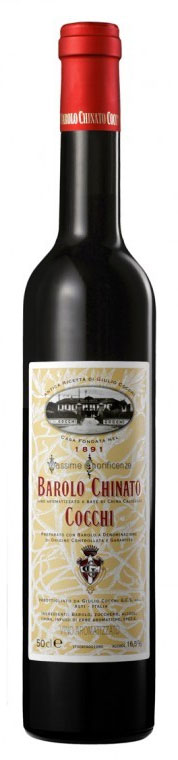
Roberto Bava, who also happens to be the president of the Italian Chocolate Association, is apparently the one who first discovered Barolo Chinato’s perfect match with chocolate, and word has now spread across Italy. The wine has a bitter-sweet profile, with gentian to the fore, and an amazingly profound sweet/dry palate that is like wandering through an ancestral spice repository. There is something about these bitter aromatic notes that does indeed remind you of dark chocolate.
By chance I was later at a tasting of Lagavulin 16-year-old single malt whisky at 69 Colebrook Row and a pairing with chocolate was also suggested. So I decided to round up some other likely candidates and have a tasting. The chocolate we used was nothing too obscure or rarefied: we started with some humble Cadbury’s Dairy Milk, included a couple of filled ones from Gü (liquid caramel and praline) and then some majestic Venezuelan 72% dark chocolate from Willie’s World Class Cacao in Devon. I later added three from Lindt: their A Touch of Vanilla white chocolate, dark chocolate with A Touch of Sea Salt and dark chocolate with caramel.**
If you search online for wine suggestions for chocolate you’ll come up with pretty much every type—even Champagne—which I guess goes to show how much variety there is in the world of chocolate. Red wine is often cited so we chose a modest Chilean Cabernet Sauvignon from Isla Negra, plus a rosé version of the same. Then I added some port (William Pickering port from Berry Bros & Rudd, which is actually a tawny), which has always struck me as a reasonable match in the past, some Cocchi Americano, another quinated wine from Cocchi, white this time, plus, as an afterthought, some rum, both bog-standard Captain Morgan and some Flor de Cana 7-year-old from Nicaragua
Cadbury’s Dairy Milk
The Isla Negra rosé went surprisingly well—not a match made in heaven but it didn’t quarrel, which must be due to the relatively sweet, fruity nature of rosé as a rule. By contrast the red wine was rather foul: somehow the combination of the particular fruit of the wine and the chocolate reminded me of a urinal. The Cocchi Americano didn’t work, as the chocolate is not bitter enough to balance the quinine. Moving on to rum, the Captain Morgan wasn’t quite there, but then it’s not a very good rum, with the distinct sourness of poor quality spirit. The Flor de Cana made much more sense. It always strikes me as quite a sweet rum, but here that vanishes leaving a fairly balanced combo, with the burnt sugar quality harmonising with the malty toasted milk powder of the chocolate. With the port the sweetness match is pretty much right there. Quite successful, I think, with each side retaining its character and not being skewed. The milk choc’s toasty qualities are able to shine. With the Ben Rye’, however, while the sweetness balance is OK, the wine somehow makes the chocolate seem coarse. The Barolo Chinato, like the Americano, found that the chocolate was too sweet to make a good match, though it isn’t too bad either, even if it again shows up the poor quality of the chocolate. There is definitely something chocolate-friendly about this wine. Lagavulin: hopeless—not sweet at all, so it seems harsh with the sweet chocolate, but also its strong malty, smoky, iodine high notes clash horribly.
Top match: Flor de Cana rum, though the Chinato does come across as capable
Venezuela 72%
This chocolate is hard, dark, bitter and smoky, with a hint of coffee. The table wines were no good at all, the cabernet sauvignon tasting cheaper and nastier than it really is. Again the Captain Morgan is made to seem the poor quality rum that it is, but the Flor de Cana again works quite well, with the rum’s burnt sugar qualities sitting well with the dry smokiness of the chocolate. The rum is dried out but what’s left balances well. But this serious chocolate made the port seem sugary and little else, and likewise the Ben Rye’ came across as too juicy and sweet, making the chocolate seem somehow cheesy. The Lagavulin should work but doesn’t really: again the iodine quality turns into something unnerving. This, on the other hand, is where the Chinato really comes into its own. The bitterness stands up well and the aromatic rootiness balances excellently with the earthy smoke of the chocolate.
Top match: Barolo Chinato, with Flor de Cana perfectly workable too
Gü Chocolate Praline Truffles
These are sweet, creamy and nutty. I thought the Flor de Cana worked quite well but Mrs H. was less convinced. I also thought the port balanced pretty competently, though again Mrs H. thinks it’s not greater than the sum of its parts. I’m not convinced about the Ben Rye’, with the light fruitiness of the wine seeming exaggerated. Not a disaster but I don’t think it flatters the chocolate. I was a bit surprised by this, as at the original Italian presentation I made a note that this wine went well with hazelnuts—we tried it with Guido Gobino’s Maximo. The Barolo Chinato makes another good combo. The gooey sweetness of the chocolate emphasizes the bitterness of the wine, yet somehow it still works. Not really convinced about the Lagavulin; it’s not too bad but still those iodine flavours of the whisky mutate into something disturbingly off-putting.
Top match: Nothing shines but the Chinato still stands tall and the rum and port are competent
Gü Liquid Caramel Chocs
These have a gooey caramel centre with a little sea salt added. They seemed particularly sweet. I felt the port again emerged as still a pretty good all-rounder; likewise the Flor de Cana, though for some reason the sweetness of the chocolate doesn’t sit so happily this time. The Ben Rye’ is also dried out. Even the Chinato struggled though was still competent. The Lagavulin, however, decided to come into its own at the point. Even though the sweetness levels are so different, this is the best pairing yet with the whisky. Clearly the nuttiness and the burnt-sugar caramel works well with the smoky, peaty iodine, and perhaps the sea salt is a natural pairing too. With a less sickly salted caramel this could be a really eye-opening combo.
Top match: Lagavulin 16-year-old
Lindt A Touch of Vanilla
I felt that this would be the one most likely to go with the Ben Rye’ and it was, though not quite as well as I’d hoped—the wine is still nicer on its own. But both parties stand up for themselves and they do spotlight aspects of flavour in each other. Port clashes nastily, evoking an off flavour in the booze. Rum was not at its best either this time. The Barolo Chinato was not an obvious choice but again it worked pretty well; its bitterness was pronounced against the creamy vanilla of the chocolate, but a nice cinnamon note was conjured from the wine. But still not really a “match”. I even tried Adnams’ North Cove Oak Aged Vodka, to see if the vanilla wood notes would work; it’s quite an interesting combination, but the vodka is a bit too dry and fierce (it’s 50% ABV) and sucks the life from the chocolate. And the Lagavulin ends up tasting of cheese.
Top match: Ben Rye’
Lindt A Touch of Sea Salt
The salt isn’t a massive presence in this product. And the dark chocolate is only 47% cocoa solids, so it’s still quite sweet. It works remarkably well with the Ben Rye’, perhaps because the sweetness levels are about the same. But not really an ideal fit. Port again sits comfortably alongside and the rum is nice too, its relative dryness coming across as refreshing rather than clashing. The Barolo Chinato was also back in its element—I think that dark chocolate has a sort of “powdery” dryness that sits so well with the dry spice and quinine of the wine. But this is also another chocolate where the Lagavulin comes into its own again, perhaps with its savouriness picking up on the salt and its pungency standing up to the cocoa character of this darker chocolate.
Top match: Probably has to go to the Barolo Chinato, though Lagavulin is certainly worth a try
Lindt Dark Chocolate with Caramel
Unexpectedly crunchy: the “crispy caramel pieces” are reminiscent of Crunchie bars. The port doesn’t work at all, coming across as strangely astringent. Once again the Ben Rye’ is really only lessened in combination. The rum is rather tasty, its sugar heritage coming across alongside the caramel. The Barolo is pretty much always in command in the presence of chocolate, but I don’t think this is the best match. I’d hoped that the Lagavulin would shine here, but it was not really to be.
Top match: Flor de Cana rum
Overall I was surprised that the Ben Rye’ didn’t do better, but perhaps it has to be matched carefully. Not that Mrs H. cared—she liked the wine so much she’d happily drink that and forget about the chocolates, which coming from her is quite something. I’d still recommend this wine but perhaps drink it on its own.
The Barolo Chinato, on the other hand, showed itself to be a good chocolate all-rounder, though working best with quality dark stuff. Likewise I think that if you want something to sip with chocs that at least won’t clash then it seems a ruby port or a decent sweetish rum will always work.
The Lagavulin was a leftfield contender. I also had some filled chocs that actually contained the stuff, along with liquorice, and that worked fine—in fact just thinking about it you can imagine how liquorice’s warm yet strident force should lock horns fairly evenly with Islay malt’s briny, peaty, iodine presence. So perhaps it needs extreme flavours like that. Planning a quiet night, munching liquorice allsorts? Get the Lagavulin in.
Finally, while preparing this test I came across The Chocolate Shop, describing itself as “The Chocolate Lover’s Wine”. But rather than partnering with chocolate, it actually has the stuff blended in it, along with a quantity of sugar. It does pretty much what it says on the tin, an ordinary dry red wine with added strong cocoa-powder flavours on the nose and palate, along with an element of black cherry (though it says it just has “natural chocolate flavouring” and sugar added). It’s not actually that sweet—and yet somehow manages to be a bit sickly. Although it doesn’t make me gag, I wouldn’t want to drink very much of it. Perhaps I’m just not used to having cocoa in my wine. I don’t know what to do with the rest of the bottle, though my sister made a good suggestion: reduce it and make a sauce for venison. Perhaps with a touch of chilli…
* Note that the invention is also attributed to Giuseppe Cappelano.
** The caramel chocolate I had to go out and buy again, as the original bar I purchased disappeared into Mrs H. within 24 hours, before I had a chance to conduct my tasting…
Sunday, 5 February 2012
Rum Cocktails To Go
At a recent Soireé in Parliament Square, I received a tip from a notable rum expert. The tip was regarding the best premix that they had tried, Bacardi's Mojito. I noticed they were on sale for about £12 in Tesco for 70cl, but considering this a bit steep for experimentation purposes, I was pleased to see that the Bacardi Mojito and the Cuba Libre are now available in single serve bottles for a bargainous £2 a time.
Mojito 5.4%
A mix of Rum, Mint, Lime and Sugar
This had a good balance of flavour: mint, lime and a touch of sweetness. It wasn't too fizzy and you can't really taste the rum. With a bit of ice, it is quite refreshing and would probably be quite nice at a BBQ. Good value for money.
Cuba Libre 5%
A mix of Rum, cola and Lime
Quite good, with a good, crisp lime flavour, albeit maybe a tad sweet. This tastes like a Cuba Libra made with Rose's Lime Cordial. There's a touch of spice from the rum, which makes it more complex than the Mojito, made with white rum. Overall, quite good and certainly worth £2.
In Conclusion
On my quest for tasty premixed drinks, I think I've tried at least 30 varieties and both of these are certainly in the top 10.
Mojito 5.4%
A mix of Rum, Mint, Lime and Sugar
This had a good balance of flavour: mint, lime and a touch of sweetness. It wasn't too fizzy and you can't really taste the rum. With a bit of ice, it is quite refreshing and would probably be quite nice at a BBQ. Good value for money.
Cuba Libre 5%
A mix of Rum, cola and Lime
Quite good, with a good, crisp lime flavour, albeit maybe a tad sweet. This tastes like a Cuba Libra made with Rose's Lime Cordial. There's a touch of spice from the rum, which makes it more complex than the Mojito, made with white rum. Overall, quite good and certainly worth £2.
In Conclusion
On my quest for tasty premixed drinks, I think I've tried at least 30 varieties and both of these are certainly in the top 10.
Subscribe to:
Posts (Atom)


