Showing posts with label Cornwall. Show all posts

Friday, 17 March 2023

Goodwood and Porthleven gins

A couple of new gins have come on to my radar in recent months. Of course, this is nothing but a teardrop in the ocean of gins that are constantly erupting on to the market, but one does what one can.

Goodwood is a place I associate these days with the Festival of Speed motorcar spree and the Goodwood Revival, which focuses specifically on vintage vehicles, and to which many of my chums in the vintage fraternity often go. Levin Down Goodwood Gin is produced for the estate and does include some botanicals sourced locally. I confess I was actually sent a sample last year, and it has taken me a while to get round to commenting on it. The bottle is notable in that the stopper is made entirely of glass, with a only a plastic grommet to give an airtight seal. The label features a drawing of a top-hatted rider in mid-air, apparently celebrating the days when Levin Down, a local hill, was popular for fox hunting—being too steep for farming—and the occasion when the third Duke of Devonshire galloped his horse down the hill so quickly that he flew over a gate at the bottom, inadvertantly inventing the hunt tradition of fence jumping. 

The label admits to local juniper, coriander, gorse and mint (plus presumably some other, non-local, botanicals). On the nose you get juniper plus orange and lime citrus notes, but also something distinctly savoury and vegetal. When I first opened the bottle this element, like nettles or sage, was rather dominating and frankly off-putting. After the bottle had been open a while it seemed to soften and the whole thing came a bit more into balance. I’ve never noticed this with a spirit before.

Now, some months later, I would say that, nosed neat, orange and lime lead the profile, but that other element is still there. I’m guessing it’s the mint. But the warm citrus dominates now, making for an inviting nose.

For the palate, I’ve written several adjectives: “pointy”, “toasty”, “waxy”. I’m not getting gorse, which I associate with a sort of coconut smell, but the mint is definitely there. My first reaction was that it was slightly curried, perhaps from the coriander, but that impression is quickly lost. There’s even a hint of banana, and the mint flavour is not so much fresh mint, but more like cooked mint—as in the mint sauce that in Britain is traditional with roast lamb.

I try a Dry Martini, using Belsazar vermouth, and that savoury element continues to dominate, but now with an unexpected note of caramel. In fact I would characterise this cocktail by flavours of mint and caramel. I try the gin with tonic water and, at my standard test ratio of 2:1, the gin is hard to pick out at all. I add a bit more to the mix, and a sort of rubbery note emerges. I’m beginning to get the impression that this gin does not mix well: with other ingredients it goes to pieces, becoming soggy and cloying.

My other new gin is one that I encountered late last summer on holiday in Porthleven, Cornwall. I feel it’s hard to keep up with Cornish gins, though this may be more a reflection on the amount of time I spend in Cornwall than on the greater concentration of gins there—nowadays every town, institution or stately home in the British Isles seems to have to have its own gin. Porthleven Gin is made by Serena Pengelly, who actually runs the excellent Ship Inn on the harbourside. Porthleven actually already had a gin distillery, Curio, whose gin I reported on a few years ago. Initially Serena’s gin was made by them, but then she switched to the Rock Distillery

Compared to Goodwood, Porthleven gin is more exuberant and forthcoming on the nose, with a cool, juicy, slightly blackcurranty nose. On the palate, however, it is not fruity as I was expecting, but characterised by strong dry spice high notes, perhaps from the coriander, and possibly the celery seeds, listed among the botanicals. (It also contains orange, juniper, angelica and orris roots, and pink peppercorns.) I try a Porthleven Martini alongside the Goodwood one, and it is effortlessly superior, with that dry spice squaring up to the vermouth to make a dry, contemplative, grown-up aperitif. In a G&T—in the same 2:1 proportions that defeated the Goodwood—that same coriander thrust cuts through, with peppercorn notes swirling in its wake, to make a dry, crisp drink. Whereas Goodwood gin rather falls apart when you mix it, Porthleven gin almost gets better, which must surely be a hallmark of a good, practical gin.

While sipping the Goodwood neat I tried to think of other flavours that it might work well with. Perhaps sharp lemon juice might balance the slightly wallowing character? So I tried both gins in a White Lady: two parts gin to one part lemon juice and one part triple sec (I omitted the egg white on this occasion, out of pure laziness). 

Again, in these standard proportions the Goodwood gin was hard to detect at all. I raised the proportion to 2½ parts and it began to emerge as a dark, low-note presence (again with a hint of banana). Not unpleasant, but not very ginlike. It’s odd, because, neat, the gin seemed to have a pronounced citrus character, which you’d think would go with orange and lemon, but as soon as you mix it, it seems to collapse into a soggy gloop.

By contrast, a Porthleven Gin White Lady is an instant triumph, with the bright, dry coriander notes rising up—though you can feel the other elements too, such as a welcome suggestion of violets (which might be from the orris)—all slotting into place with the cocktail’s other ingredients.

While I’ve been writing this I’ve been sipping on a generous Porthleven G&T, from a bottle that is now nearly empty, which tells you all you need to know. Not sure what I’m going to do with the rest of the Goodwood, though…


Friday, 10 August 2018

Cornish gin update

I was back in Cornwall on holiday last month and, perhaps unsurprisingly, the range of locally produced gins had expanded.

In a seafront bar in St Ives I tasted a sample of the murky St Ives gin, cold compounded using locally-foraged botanicals, such as seaweed, gorse and basil. The literature states, “a special blend of 13 botanicals gathered from the Cornish coastline, cottage garden and cliff tops come together to create this distinctively different gin experience,” but I’m assuming not all the botanicals are local, and indeed the website actually states that local ingredients are used “where possible”. I confess I was not immediately taken—it seemed a bit cloying and not very ginlike—but I will withhold judgement until I’ve given it a proper tasting.

In John’s – The Liquor Cellar, again in St Ives, I asked for a recommendation and came away with an elegantly square bottle of Foy gin. It’s made in Fowey, which is indeed pronounced “Foy”, and the producers must have decided it was simpler to spell it that way than be forever correcting people who asked for “Foh-ee” or “Fow-ee”. The label gives little away, other than that is has six botanicals and, intriguingly, is made from their own alcohol. “They” turns out to be Fowey Valley Cider, and producer Barrie Gobson confirms that the base spirit is made from apples. They also make a vodka, an eau de vie distilled from their vintage cider, and a liqueur blending the eau de vie with apple juice.

Barrie’s description of the development process is interesting: “I had a few groups of tasters in the area—all gin fans. My first few creations got the ‘OK, but not great’. I personally think a lot of the new gins have rather overpowering botanicals with a lot of ‘aniseedey’ and ‘liquoricey’ flavours. Eventually I gave up on the unique ingredient idea and went back to some very old recipes for inspiration. This was the breakthrough and eventually our ‘back to basics’ classic dry Foy Gin was born.”

Neat, the gin leads with juniper and prominent juicy orange peel. There is also a definite stemmy, herbal element and warm sweetness that reminds me of gingernut biscuits but may just be suggested by the orange. The sweetness extends to a floral note. On the tongue it is dry; I’d like to say I can detect apples, but I can’t. There is a delicate whirl of warm spices and a lean, slightly bitter, finish. In a G&T it has quite a distinct character, with a whiff of what reminds me of fresh cucumber and dry woody spice like coriander or cumin on the palate.

The whole “artisan gin” game seems to accept, as one of its rules, that these gins are pricey, typically around £35 a bottle. But Foy gin is £32 for just 50cl—the equivalent of £48 for a regular bottle—so you would have to be jolly keen on it to make it your everyday snifter. Some of that price is going to come from the expensive-looking bottle. It has occurred to me that self-consciously “local” gins could have a scheme where you can take your empty bottles back to the distillery shop and get them refilled at a discount, but I guess this might defeat the object—having an expensive-looking bottle is your justification for charging a premium price. (Making your own base spirit certain pushes up costs, but the gin itself is never going to be the expensive bit: even an off-the-shelf bottle will probably cost the producer more than its contents.)*

The other two gins I came away with were both from brands I’d already tried and liked, Trevethan and Tarquin’s Cornish Gin, but in each case I discovered they had produced a Navy strength edition and decided to give them a try.

Generally speaking (and I believe it is the case for these two) a Navy stength gin is the same recipe as a distillery’s regular offering, but bottled at around 57% ABV. Apparently back in the 18th century, when globe-trotting Royal Navy officers were stocking their ships with gin (there was a Naval ordinance declaring how much gin was required to be carried on board), there developed a suspicion that suppliers were watering the stuff down. Being in the Navy they had plenty of gunpowder knocking around and they discovered that if gin were spilled on to gunpowder, the gunpowder could still be lit if the gin was at least 57% alcohol. So that become “Navy strength”, since it was easy to test if any given sample complied.

So what, in this day and age, is the point of Navy strength gin? I have often wondered this myself. In a G&T you could simply adjust the amount of tonic and it would come to the same thing. Drink it neat? Really, at 57%? I suppose that if you feel that stirring or shaking with ice dilutes your Martini too much, then you might feel that Navy strength can counter this—so that after dilution from shaking, the gin comes back down to the ABV you wanted in the first place.

Neat, Trevethan Chauffeur’s Reserve is pretty intense. I’m definitely hit by that coriander-driven character, but I’m sure I remember a more complex interplay of flavours from the regular-strength version. I make a Martini and it still feels a bit closed. I experiment with re-shaking it repeatedly, therefore introducing more water from the ice each time, and I’m struck by the velvety smoothness of the mouthfeel, almost chocolatey.

So I try some basic gin cocktails, staring with an Aviation (roughly two shots gin, half each of lemon juice and maraschino and about a teaspoon of crème de violette). The Foy makes a nice drink, still with that vegetal/cucumber thing going on. Then I try one with Trevethan and suddenly I change my tune—the character of the gin shines through, the coriander dry-spice vibe sitting very comfortably with the wood-tannin element of the Luxardo maraschino. It’s a thought-provoking experience—the two versions are the same cocktail but quite different drinks.

So perhaps this is the point of Navy strength gin. There are definitely cocktails out there where more delicate gins are just swamped by the other ingredients. I try a Corpse Reviver No.2, which definitely falls into this category of cocktail. (Classically it’s one shot each of gin, curaçao, lemon juice and Kina Lillet plus a dash of absinthe—Kina Lillet hasn’t been made since the 1980s, but Cocchi Americano works well, and China Marini works well too, though its dark colour messes with the visuals.) Again the Trevethan is a triumph, easily standing up to—and harmonising elegantly with—the other components.

The simple but powerful Negroni (equal parts gin, Campari and red vermouth) can challenge more subtle gins, but here again the Trevethan makes its presence easily felt.

Tarquin’s Seadog gin is his Navy strength offering. As soon as you stick your nose to the bottle there is an extraordinary parma-violet floral concentration. This gin does use violets, picked from Tarquin’s garden, although it’s interesting that I wasn’t struck by a floral character from the regular gin. I think the chap who sold me the Seadog might had intimated that they adjusted the balance of the botanicals for this expression, but it’s worth noting that the botanical bill includes orris and angelica too, which might actually be where the floral thrust is coming from. Neat I also get a black pepper element. Stirred with ice I notice that the gin louches a bit, testament to the high concentration of essential oils dissolved in all that alcohol.

A Negroni made with Tarquin's Seadog gin

I try a Seadog Negroni, and once again get proof that this cocktail is a good showcase for Navy strength. Mind you, that’s not to say that the Negroni is the best thing to make with Seadog: the fruity/floral character, while rising clearly above the powerful flavours of the vermouth and Campari, does seem to lend the drink a Jelly Baby character, and I’m not sure that is a good thing.

A Seadog Aviation turns out to be more successful. I confess I was expecting this to be slightly pointless and one-note, given that the cocktail has crème de violette in it anyway, but it’s a profound drink with an intense synergy between the sweet and floral notes and the wood tannin edge of the maraschino—definitely a drink where the distinct barrel-aged character of Luxardo really works. Moreover there is a definite dry violet note floating above the sweet/sour/fruit combination of the liqueur and the lemon juice. (I use Bitter Truth crème de violette, which is pretty dry, and not really like a liqueur at all.)

Finally, I try a couple of White Ladies with the Navy gins (gin, curaçao and lemon juice—it should have egg white too, for a silky texture, but I didn’t have any to hand). Both drinks were a success, though for me the refined coriander backbone of the Trevethan makes for an elegant, patrician beverage that nudges ahead of the floral exuberance of the Seadog version.

* This is based on what Martin Price of SW4 told me.

Wednesday, 28 February 2018

When is a gin Cornish?


I like Cornwall, England’s westernmost county, and regularly go on holiday there. It was on a previous jaunt, to the Roseland Peninsula, that I came across Tarquin’s Cornish Gin, which got me thinking about how one could meaningfully create a gin that seemed redolent of Cornwall itself. (Tarquin’s gin has mostly conventional botanicals from all over the world, with the only local one being violets from Tarquin’s garden.)

The last time I was in the area I popped into the Polgoon winery near where I was staying. I’d been before, sampled their wines and frankly found them pretty unpalatable, but I like the idea so I went back to give them another try. Their product was still unexciting (though they also make cider, which is better), so I poked around in the shop and found a whole wall of Cornish gins. More or less at random I picked three to try, Curio, Wrecking Coast and Trevethan. Each of these takes a different approach to what might make a gin distinctly “Cornish”.

Curio gin is made by the Curio Spirits Company in Mullion, west Cornwall, which is husband and wife team William and Rubina Tyler-Street. The Big Idea is that Curio uses rock samphire (Crithmum maritimum) as a botanical, which grows on cliffs in the area. It is not to be confused with the more commonly-encountered marsh samphire (Salicornia europaea), which I first came across in a fishmongers some years ago, sold as an accompaniment. I was told it grew on the coast and was only in season for about three weeks a year; later I foraged my own one summer on a flat, marshy beach in Norfolk. It has a pleasant crunchy texture and a light salty flavour. It is sometimes called sea asparagus, but it is not nearly as strongly flavoured as asparagus. Nowadays it is sufficiently fashionable (at least in London) that I see it in supermarkets all year round, imported from the Middle East and elsewhere.

Rock samphire, on the other hand, is still pretty obscure, probably because it has a strong, alarming flavour. While rambling on the coast we crossed a beach where, according to the guidebook, rock samphire grew on the cliffs; I did nibble some stalks of what I concluded must be the right plant (though Mrs H. was sceptical) and it was pretty fiery and pungent. Curio has a dominating flavour of mint, both on the nose and the palate, a sort of soggy mint with an undertone of fennel. I’m guessing this is your rock samphire, as it is also known as sea fennel. The illustration on the label shows the samphire, and also juniper and star anise (and what looks like coriander leaf but presumably isn’t). The company say that there are 15 botanicals but won’t give them away apart from samphire, juniper, star anise, cinnamon and seaweed. Mind you, there is a photo on their website which seems to show them all. How good are you at identifying them? I can also spot lemon peel, nutmeg, coriander seed, fennel sea, and what looks like ground almond and orris root powder, plus some sort of dried flower?

The botanicals that go into Curio

It's one of those occasions when I can’t really pick up on many of those, so dominating is that sweet mint/fennel thing. There is a waft of fresh lemon on the nose, and a bit of pepper and caramel on the finish. It goes well enough with tonic, but that mint flavour persists and, for me, becomes more cloying as you go on. The recommended serve is on the rocks with a pinch of sea salt. The spirit is certainly smooth neat (they say their spirits are “quadruple distilled”) and the salt adds the briny promise that is there on the label but not in the spirit itself (despite the presence of seaweed in the mix), but I can’t really warm to this gin. I am just haunted by those nagging pungent, aromatic oils.

Wrecking Coast is made at Tintagel, on an area indeed known as the Wrecking Coast because of the violent winter weather. The microdistillery uses a selection of 12 botanicals (apparently juniper, coriander, chamomile, vanilla, angelica, liquorice, orris, grains of paradise, cassia bark, cinnamon quills, lemon peel and aniseed), steeped in neutral grain spirit for 14 days, then redistilled through a computer-controlled iStill designed in the Netherlands, before being rested for a further seven days. But the Big Idea with Wrecking Coast, in fact the starting point for the whole project and the thing that makes it self-consciously Cornish, is clotted cream. In case you don’t know, clotted cream is a local delicacy, made by gently heating cream to produce a very thick, slightly caramelised end result with a fat content of at least 55%. The distillers seem to blend clotted cream with more grain spirit (I assume the fat dissolves in the alcohol) then use a separate, hand-blown glass vacuum still to redistill that mixture.* I guess they must have found that traditional heat distillation did something horrid to the taste. The two distillates are blended then diluted down to 44% ABV.

Making alcohol from dairy is nothing new—some vodkas are milk based and it was a common base for illicit Irish poitín (in fact I believe Knockeen Hills is made from milk) but I have not heard of someone mixing cream with neutral grain spirit then redistilling that.** Wrecking Coast say that the resulting drink retains the flavour of the cream while also gaining a “rich, velvety feeling in the mouth”. Certainly some spirits do have a creamy, unctuous mouthfeel, such as Sipsmith and Chase vodkas, though neither of those has any dairy in them.

The first thing that hits me on Wrecking Coast’s nose aside from mentholly jumiper, is citrus, plus lemony coriander and something herbaceous, like lemon balm. There is also a strong sweetly floral element, like violets. Particularly when sniffing the neck of the bottle I get toffee or caramel notes too. The palate is also citrus-forward plus juniper, coriander, perhaps berry fruit, and a perceived floral sweetness (orris?), which grows if you let ice melt in the gin. I also find a growing sense of that aniseed. I am much taken by this gin; I like its botanical intensity and the sweet/savoury balance. But I confess I don’t get cream. And a velvety feel in the mouth? Actually, out of the three gins on test here, this one actually has the fiercest mouthfeel, but then it is the strongest at 44% ABV.

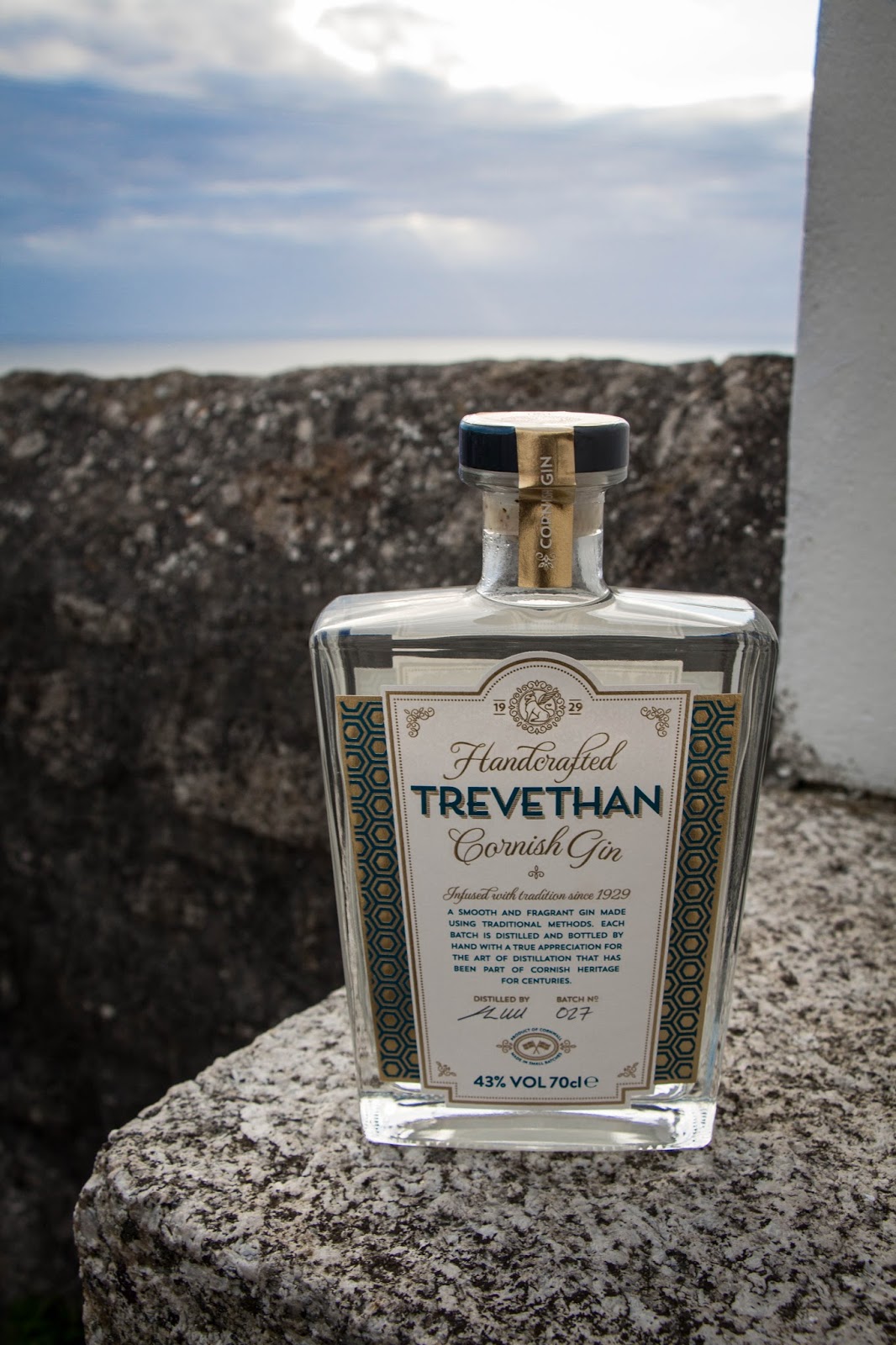
Trevethan takes its Cornishness from its back story. In the 1920s local man Norman Trevethan was a chauffeur to Earl and Lady St Germans and would sometimes take them to events in Jazz Age London. Inspired by the cocktail culture he found there, he decided to join in by making his own gin. There was a long rural tradition of making alcohol from seasonal crops, though quite how easy it would have been for Norman to find conventional gin botanicals I do not know. Then in 2015 two industrial food and drink scientists got talking—one of them, Robert Cuffe, is Norman’s grandson and the other, chemist John Hall, heard about his friend’s grandfather and had a hankering to recreate the family recipe.

I’m not sure how much resemblance the modern version has to the original—the suggestion is that they merely “tweaked” it. I met John at the World Gin Awards judging and he told me that Rob’s mother can remember going out with Norman to gather botanicals for the gin, so I guess they must have some idea of the original recipe. The modern gin does contain elderflower and gorse flower foraged at Trewonnard Farm in Treneglos, and, like all the gins here, it is made with Cornish spring water.

Norman Trevethan
The distilling notes are enlightening. They know that Norman only made his gin in small batches, which is how they made their test recipes, but scaling that up to their 300-litre copper pot still (still “small batch” by commercial standards) meant making adjustments to keep the flavour the same. In tests they used the gorse to add a hint of sweetness but found they needed to add vanilla to maintain this at high volume, which also helps create a smooth, oily mouthfeel. They describe the profile as juniper-led, backed up by cassia and angelica, with citrus “hiding in there” and cardamom “lingering at the end of the mouthful”. Other botanicals mentioned are coriander, orange peel, lemon peel.

Compared to the other gins tasted here, Trevethan immediately emerges as more elegant and poised. I like Wrecking Coast but it is more boisterous and in-you-face, whereas Trevethan has a reserved complexity. At times I have decided it was all about coriander, then cardamom (and I think the cardamom does emerge more with dilution). Sniffing the bottle again now I get lemony citrus, balanced by warm, perfumed lower notes, definitely including cassia. Then you notice the resinous juniper. And now and then you’re hit by a sideways stab of very savoury curry notes. It is indeed smooth and oily on the tongue, though sipping it now I still feel that high, dry, aromatic coriander seed notes dominate, followed by fresh coriander or parsley leaves. On the finish I could certainly believe there is elderflower here.

Without doubt Trevethan is my favourite of these three. It’s a sort of “desert island gin” in the sense that it does the fundamental job required of a gin, without being gimmicky, but also has a complex balance that reveals different nuances at different times. Even after you’ve swallowed it the aftertastes continue to evolve. It rewards study if you want to ponder it, but it also delivers if you just want a drink without thinking about it.

Does any of these gins capture the essence of Cornwall? No, but then gin is not a quintessentially Cornish thing. Curio may well pack a big hit of rock samphire, but there is probably a reason why we don’t eat rock samphire very much. Wrecking Coast is a fun gin but does appear crude next to Trevethan, and I’m damned if I can detect clotted cream in it. Trevethan, on the other hand, make the point that theirs is traditional—because Norman was trying to create a normal gin, not trying to stand out in a crowded market by being Other.

In my rambles along Cornwall’s clifftop paths I have often reflected that, aside from brine, one powerful fragrance of the area is indeed gorse, which is everywhere and has a powerful smell, sweet and distinctly redolent of coconut. I’m not sure that, blind-tasting Trevethan, I would leap up and yell “Gorse!”, but it does have a sweet, warm, perfumed element to the nose in which I can definitely believe that gorse is playing a part.

* Conventional distilling raises the temperature of the liquid till the alcohol evaporates off and can be condensed in a second chamber. Vacuum distillation achieves evaporation by instead lowering the pressure inside the vessel. In fact lowering the pressure has the effect of causing the temperature inside the vessel to drop. Ian Hart from Sacred Gin does all his distilling this way and I believe that Oxley does as well. Clearly if you are not “cooking” the liquid the end flavours may well be different.

** Today I learned that in the early days of vodka-making it was common to distill the spirit a couple of times, then mix it with milk before distilling it again, which is much more like what Wrecking Coast are doing.

Thursday, 23 October 2014

Hoist the gin pennant for Cornwall's finest

Walking along the cliff path on St Anthony Head in Cornwall, with views out over the mouth of the Fal, the ancient fortifications of Pendennis and St Mawes Castles, the boats slicing in and out of Carrick Roads, I got to wondering what a self-consciously Cornish gin might taste of—what local botanicals could you use that would evoke the flavour of the place? Seaweed or something briny? Or the blackberry bushes that line all the paths, from which I idly picked as I walked along?

So I was interested to notice, while sitting in a fairly minimalist restaurant in St Mawes, that one of the few spirits on offer was Tarquin’s Cornish Gin. I tracked it down and discovered that it is, indeed, made by a chap called Tarquin Leadbetter at Southwestern Distillery in Wadebridge. They make just two products, the gin and Cornish Pastis (see what they did there?), using a small flame-fired copper pot still. They use fairly traditional botanicals from around the world (though mostly sourced through a bloke called David, apparently)—juniper from Kosovo and coriander from Bulgaria (which they describe as lemon-sherbety rather than hot and spicy like Moroccan coriander), angelica root from Poland, orris root from Morocco, green cardamom seeds from Guatemala, bitter almond from Morocco, cinnamon from Madagascar and liquorice root from Uzbekistan. They also use fresh (rather than dried) citrus peel, orange, lemon and grapefruit, from wherever they are in season in the world. And the final, magic ingredient—and the one that makes it distinctly Cornish—is Cornish violets, grown in Tarquin’s garden. It is diluted down to 42% ABV using springwater from near Boscastle (which is also bottled and sold as mineral water, called MeadowSweet). Each bottle of the small, 300-bottle batches is signed and numbered by hand by Tarquin himself, and dipped in striking blue wax for good measure.

I notice that, in addition to Tarquin’s signature and the bottle number, the label also includes a box labelled “Character”, again filled in by hand on each bottle. You might think the character of the gin would be fixed by the recipe, but Tarquin deliberately includes these tasting notes to emphasise the variations you get with gin made in this way. “We're celebrating the nuances between batches, highlighting the fact that our spirits are not mass-produced,” he tells me. “We could have blended batches, or implemented a sherry-style solera bottling system. But I think it's quite fun to do our crafty sort of way.” My sample was “Earthy orange”, while another bottle I had a taste from was “Eastern spices” and one in a photo on the website is “Fresh orange blossom”.

“In the months up to Christmas we're doing something special with some filming, to make these tasting notes more interactive,” Tarquin adds. “…So stay tuned!”

Tarquin's hand-written tasting note on my bottle from batch 91
If I expected the gin to smell of violets I was in for a surprise. Chilled you mostly get fresh, stern juniper and lemony coriander to the fore. On the palate you also notice a softness, perhaps from the water, or the liquorice or the orange peel. At room temperature the orange notes are more prominent on the nose too, along with an interesting herbaceous quality that emerges as quite a characteristic. Interestingly Tarquin says, “One unusual ingredient is the Devon violet. From these I take the delicate leaves, which add a vibrant green freshness to the gin and create something deliciously unique.” So it is not the violet flowers involved but the leaves, and this is presumably the stemmy, herbal element that I am getting.

I instantly warm to this gin, not least because it is a gin that knows it’s a gin. So many modern gins shy away from juniper in favour of sweet or floral elements which are, let’s face it, aimed at attracting people who don’t really like gin. But Tarquin puts juniper up front. As such the gin works well in a G&T and especially in a Negroni, where the juniper pokes through but the mid-range elements and the underlying softness round the drink out too. Then you have that interesting herbal layer combined with the orange aroma, and at the bottom a relatively soft, sweet finish so as not to scare the horses. This also makes it good for a Martini as it is relatively approachable neat.

To get a clearer picture I put the gin head-to-head with some others. Bombay Dry emerges as drier, with a lemon-sherbet sharpness, with Tarquin’s gin softer and sweeter. SW4 has a similar fullness, but Tarquin’s gin comes across as more savoury, leafy and herbal, while SW4 is plumper, sweeter and more about spice. Tanqueray is quite similar on the nose but Tarquin’s is fatter and more complex, with more herbal punch and again a softer, sweeter finish. Beefeater 24 does have a tea element which stands out and it is lighter and drier. Finally, G’vine Nouaison matches up in the aromatic stakes, smelling quite minty and suggesting sweet roots. In fact it seems positively cloying, again emphasising the savoury herbal cut of Tarquin’s jib.

Overall I think Tarquin’s Cornish Gin is a remarkable achievement, managing somehow to combine the steely, upright juniper cutting edge of classic London Dry Gin, with a sophisticated modern soft finish, and a distinctive mid-range of orange zest and sappy herbaceous punch, like fresh leaves crunching under foot. It is complex and versatile, but not so outré as to fall down in classic gin cocktails.

Does it remind me of Cornwall? The bottle has images of fishing boats, basking sharks and what looks like the lighthouse not fifty yards from where I was staying, but there is nothing of the sea about the liquid (though I suppose a dash of Islay whisky might remedy that). But Cornwall does have a warm, humid microclimate, so perhaps the waft of verdant undergrowth in this gin is apt.

Tarquin’s Cornish Gin can be had online from Master of Malt for £35.57 or if you’re in Falmouth you can pop into the Bottle Bank and get it for about £29. For more stockists see www.southwesterndistillery.com.