Showing posts with label angostura bitters. Show all posts

Tuesday, 10 January 2012

Price of Angostura Bitters set to skyrocket?


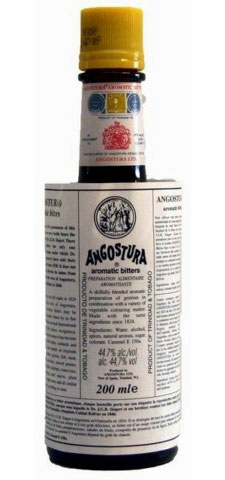
The oversized label apparently happened
by accident with a faulty batch. When
no one corrected the mistake in the next
 batch the bottling plant ended up using
the dodgy batch, and it quickly became
iconic.

A lawyer friend of mine (yes, it is technically possible) asked my opinion back in August for a document he was preparing to challenge a proposal to lift the exemption from excise duty on Angosura Bitters. Angostura is actually 44.7% ABV, so it technically a booze, but since 1970 it has been exempt from UK duty—according to a press release from HM Revenue & Customs, this measure was introduced to help the economy of Trinidad, where it is made. HMRC now feel that that help is no longer needed.

My chum’s argument, however, was that the reason Angostura is not taxed in the UK “and most other countries” is that it is used to add flavour rather than as an alcoholic drink in its own right, and that the alcohol present is simply a preservative. Since it is used in such small quantities, he estimates that a 200ml bottle will contain over a 100 doses and, even in a domestic context, will be used in drinks for at least a dozen people—and obviously far more in bars. Since some 240,000 bottles of Angostura are imported into the UK each year, the tax change will affect an estimated 3 million people here.

HMRC estimates that the lifting of tax relief will raise the price of a 200ml bottle in the UK by £2–3, which is 35–50%, and as a result will cut UK sales by half. It’s worth noting that the turnover of the manufacturer, the House of Angostura (there’s an idea for a theme park ride), represents 3% of Trinidad and Tobago’s entire non-petrochemical manufacturing GDP.

Like many traditional bitters and liqueurs, Angostura started life as a medicine, invented by German ex-pat Johann Siegert in 1824. Siegert had gone to Venezuela to help Simon Bolivar fight the rule of the Spanish throne and Bolivar appointed him Surgeon-General to the military hospital in the town of Angostura. He created the bitters from herbs and roots* to treat fevers and stomach disorders afflicting the troops, and the tincture also became popular with seasick mariners. By 1850 demand outstripped supply and Siegert resigned his commission to focus on the bitters. After the doctor’s death the torch was carried on by his son, Carlos, a bon vivant and dandy who exhibited the product in London—where it was a hit with gin—Paris, Vienna, Philadelphia and Australia. Fearing the political instability of Venezuela, Carlos and his brothers moved the business to Trinidad, where it had remained, attracting various royal warrants and even a visit by the Queen in 1985.

Of course nowadays there is a huge number of new bitters on the market, many focusing on one particular flavour, such as orange, grapefruit, rhubarb, pepper or chocolate. It’s worth noting that none of these rivals gets the same tax relief—just Angostura. But when there was a shortage of Angostura in 2009 there was a panic among the bar community: clearly nothing else could quite take Angostura’s place. This may be, to one degree or another, a matter of history and culture—most normal people have heard of Angostura but are almost certainly unaware of any other bitters. Yet there is more to it than that: there really is something of the magic formula to Angostura. If I myself were on a desert island and, for some reason, were only allowed one type of bitters, it would undoubtedly by this one.

That iconic, if wordy, label. Click to enlarge

My friend’s argument was that a 50% loss in UK sales would actually mean a net loss to the Treasury, partly because the gain in excise duty would be offset by the lost VAT, reasoning that because of Angostura’s uniqueness there would be no alternative product purchased in its stead. I think that for most consumers this is probably true, given that, as mentioned above, they are probably not aware of any other bitters, and are unlikely to come across them in their normal shopping environment. Moreover (and here’s where the argument gets a little more speculative), he contends that the majority of Angostura goes into Pink Gins: he may have a point here, when you consider the hinterland of drinkers of a certain generation, compared to the relatively small community of cocktail-heads.

“It is important to remember that the Pink Gin occupies a unique position amongst alcoholic drinks,” he argues,” being the only way that the vast majority of drinkers will drink a very short, almost neat, gin.**  This is in contrast to other major spirits, such as whisky and vodka, where drinking neat, or with just ice or a small splash of mixer, is much more common.

A pink gin yesterday
“In addition, the drinking of Pink Gins is a particular social action, particularly amongst those who are its regular devotees, for which there is no direct substitute.” He estimates that 20% of Pink Gin sales will be entirely lost, rather than the drinker switching to something else.

So a slump in Angostura sales will lead directly to a slump in gin sales, he reasons, meaning more lost revenue for HMRC. Moreover he believes that those Pink Gin drinkers who do switch rather than abstain will most likely move to premium vodkas made outside the UK, rather than gin made here, leading to yet more lost tax. He also contends that 18 UK jobs will be lost on the manufacturing side and 79 in the bar sector. Overall he reckons the Treasury will be down by some £2.8 million.

His plan was to submit his proposal anonymously under the banner of the Pink Gin Alliance, which tells you something about the degree of tongue-in-cheekery going on here. In any case, the government have evidently not been swayed by his argument, and the lifting of tax relief on Angostura Bitters will come into force in April 2013. Better start stockpiling now.

* The story goes that only about five people in the world know the formula. Some years ago when the writing on the piece of paper locked in a New York vault began to fade, the only other copy was exhumed and the recipe copied on to another sheet, which was then cut into quarters, each quarter sealed and dispatched separately by plane to New York. Who knows if any of this is true but it’s a good story.
** In fact recipes vary. Some people shake gin and Angostura with ice and serve in a Martini glass. My father-in-law likes his half-and-half with water. But the Pink Gin is undoubtedly historically significant, being the signature drink of the Royal Navy, allegedly because the gin was drunk to make the bitters (taken medicinally) more palatable.

Friday, 28 October 2011

What use are "single varietal" bitters?


Most of us probably have a bottle of Angostura bitters somewhere: it’s one of those things, like Tabasco, that never seems to get finished. But such is the strength of the cocktail revolution going on at the moment that all manner of other bitters are being unleashed on to the market, ranging from the primordial Peychaud’s bitters, recreations of ancient recipes such as celery bitters and Jerry Thomas’s favourite Boker’s bitters, to all manner of fruit and veg flavours (grapefruit, rhubarb, cranberry, plum…) and oddities like chocolate bitters.

Bitters are the granddaddies of the cocktail world. Originally medicinal infusions of bitter herbs, roots and barks, it’s likely that we started blending them with booze to make the medicine easier to take, then developed a taste for it. The original definition of a cocktail was specifically a spirit augmented by any or all of bitters, sugar and water. Any other kind of mixed drink fell under a different name. Now the term “bitters” is used for any concentrated flavoured tincture a dash or two of which might be used to deepen a cocktail’s flavour or add aromatic notes.

Master of Malt have thrown their hat into the ring with a range of “single varietal” (a term taken from the wine world, I assume) bitters—each featuring just one flavouring ingredient, infused in vodka, bourbon or rum. The range includes sour cherry, cinnamon, black pepper, cumin, juniper (a kind of “gin concentrate”—add a few drops to vodka, perhaps, and voila?), cardamom, clove, coriander, fennel, angelica, cocoa, coffee, liquorice, sweet orange, gentian, curaçao (bitter orange), chilli (both smoked chipotle and volcanic naga) and frankincense. They also do their own blended products, such as their whisky-barrel aged bitters and a forthcoming Christmas bitters.

Of course the first thing that sprang to mind with the single varietal ones was—is this any better than just using the ingredient itself? For example, why use cumin bitters rather than just a pinch of cumin? I tried using just such an ingredient in one of the North African inspired drinks at the A Night in Casablanca event that the Candlelight Club held in August:

Djinn Fizz
2 shots gin
1 shot lemon juice
½ shot crème de menthe blanche
½ shot sugar syrup
Pinch of cumin/few drops of cumin bitters
2 shots soda water
Shake first five ingredients, strain into a glass and add soda. Garnish with fresh mint.

The cumin is by no means essential but in moderation it is quite interesting, adding a flavour that is fresh but quite savoury. I tried this with both ground cumin and cumin bitters and the result is pretty much the same, though you need more of the bitters than you might think.

Or course the big difference is that the bitters are liquid and therefore blend easily. Spices as a rule do not dissolve as such: I don’t know what actually happens to the cumin in the Djinn Fizz, but in the following cocktail—created for the Candlelight Club’s Boardwalk Empire Season 2 launch party—I had trouble with the ground cinnamon:

Applejack Rabbit
1½ shots Laird’s Applejack
½ shot Aperol
½ shot maple syrup
¾ shot lemon juice
1 shot orange juice
Pinch of cinnamon/few drops of cinnamon bitters
Apple slice to garnish
Shake and strain into an ice-filled highball. Garnish with a slice of apple. An old cocktail from the 1930s, with added Aperol (something that currently vies with tea as the cocktail ingredient du jour).

It tasted right, but the actual particles of cinnamon are quite visible and quickly sink to the bottom. I also noticed that if you left the cocktail for a while the cinnamon flavour intensifies, as the ground bark spends more time infusing. On the night the bar staff mostly just sprinkled the cinnamon on the top instead. By contrast, the Master of Malt Cinnamon Bitters avoids this problem altogether.

Similarly, another cocktail from our Moroccan night (originally created by Will Sprunt for our Mad Hatter’s Tea Party, and here just wheeled out again under a different name because it went so well with the theme) originally used cardamom seeds:

Rose Martini (aka Queen of Hearts)
2 shots gin
¾ shot dry vermouth
½ shot rose syrup

The seeds from a cardamom pod/few drops of cardamom bitters
Lemon twist 

Shake cardamom, gin, syrup and vermouth together, and strain into a martini glass. Finish with lemon peel. This is a cracking cocktail that tastes like alcoholic Turkish Delight.

First of all I found that you really need to crush the seeds with a muddler to get any flavour out in the short time that you are shaking. But actually splitting a cardamom pod is pretty fiddly and not really something you want to be doing in a busy bar environment. In this example, using 5–6 drops of the cardamom bitters was a godsend, adding the desired flavour quickly and without any solid residue to worry about.

Then you have something like the Master of Malt Frankincense Bitters. Most of us probably don’t have lumps of frankincense knocking around the house, so if that is the flavour you are after then this is clearly a good way to go. Frankincense (a resin tapped from the Boswellia sacra tree) is a hard flavour to describe, being a bit like cinnamon but less overtly woody. If you’ve ever done any soldering (solder includes resin) the smell of frankincense will be familiar. I plan to try using the bitters in a Christmas cocktail called Gold, Frankincense and Byrrh (using Goldschläger or Goldwasser, Byrrh and Frankincense Bitters, perhaps with a gin base)—expect a report in a month or so as to whether this has any merits beyond a play on words.

Another possibility is to play with gin by using the coriander, cinnamon, angelica or cardamom bitters (all common enough gin botanicals) to push your gin’s flavour balance one way or another. Fennel and clove too, now I come to think of it. Of course these are infusions rather than distillations, so things like the gentian bitters (which I have not tried yet) will presumably be indeed very bitter (like Peychaud’s or Angostura bitters, which contain it), compared, say, to Ian Hart’s Sacred range of single-botanical distillates, in which the distillation process removes all bitterness from botanicals such as gentian, hop or wormwood.

Check out the full range of Master of Malt bitters here.

Friday, 7 January 2011

Astringent Cocktail


Astringent Cocktail

Whilst researching Ginger Ale I stumbled across this recipe in Jack's Manual from 1910:


I used Croft Indulgence Port and Martell and some ginger water as my Jamaica ginger.
The Taste: Quite repulsive! spoils the Port, Brandy, Ginger Water and even the Angostura Bitters. Such a waste! The final tingle of ginger was the only upside.


On the other-side Mrs. Godfrey loved it's profile of warmth and thought it rather tasty and smooth. Well they do say opposites attract and this was one cocktail she was welcome to finish!